
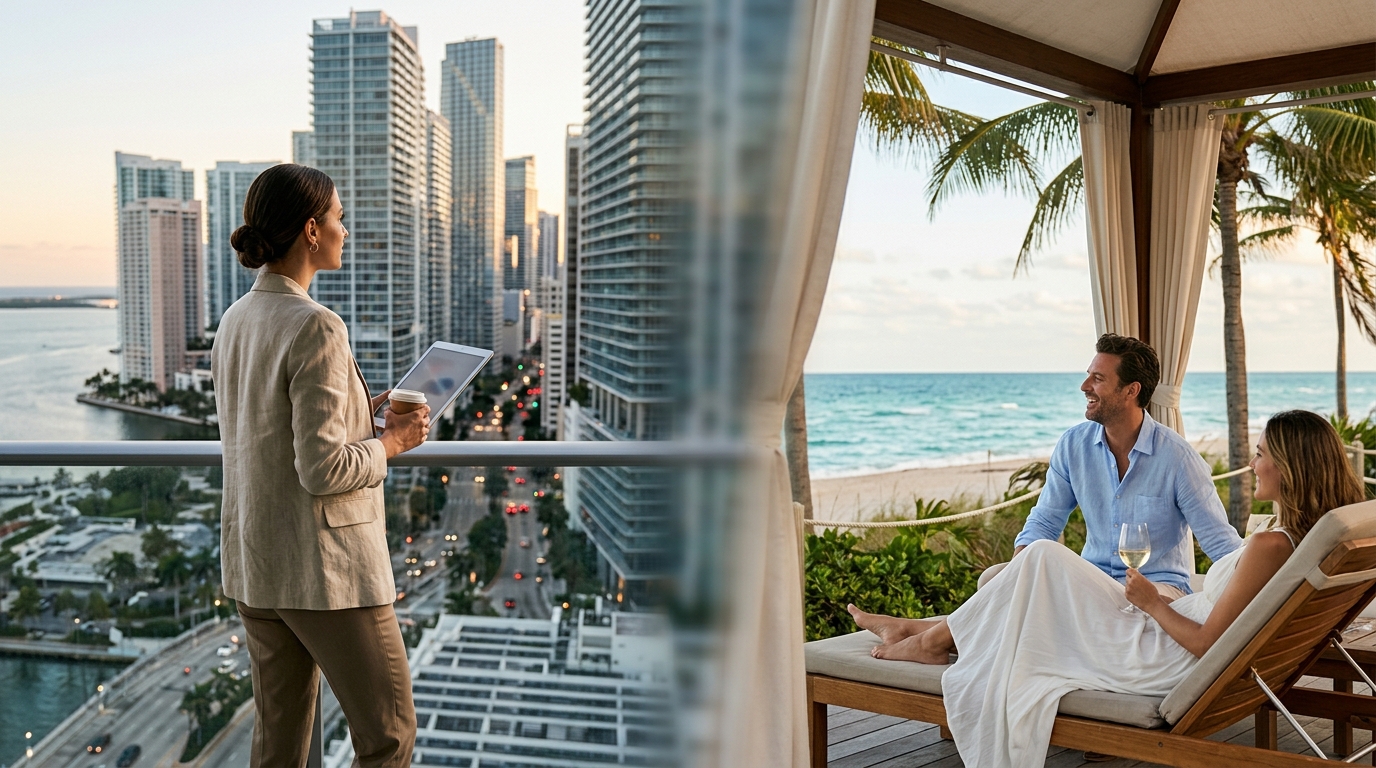
Miami's real estate landscape is defined by distinct micro-markets that cater to vastly different lifestyles and investment strategies. Understanding the divergence between urban density and coastal luxury is critical for any serious investor. According to recent market analyses, the median home price in Miami-Dade County has seen significant volatility, with coastal properties often commanding a premium of 20 to 30 percent over inland urban equivalents depending on the specific block. This disparity creates a complex decision matrix for buyers who must weigh liquidity, lifestyle, and long-term appreciation potential. The following analysis breaks down the core differences between two of the most sought-after destinations: Brickell and Miami Beach.
The Urban Core: Brickell's Financial District
Brickell is widely recognized as Miami's financial district, often referred to as the "Manhattan of the South." This area is characterized by its high-density skyline, modern high-rise condominiums, and a vibrant urban atmosphere. The neighborhood serves as the economic heart of South Florida, attracting professionals who value proximity to work and a walkable city environment.
Architectural Density and Modernity
The architectural landscape in Brickell is dominated by contemporary glass and steel towers. These structures offer panoramic views of Biscayne Bay and the downtown skyline. Brickell is defined as a high-density urban neighborhood located in the heart of Miami, Florida, known for its skyscrapers and financial institutions. This density creates a unique ecosystem where residential living is seamlessly integrated with corporate offices, high-end dining, and nightlife.
For buyers seeking a low-maintenance lifestyle, Brickell offers extensive amenities within the building itself. These typically include infinity pools, state-of-the-art fitness centers, concierge services, and direct access to public transportation. The area is highly walkable, with the Metromover providing free access to key parts of downtown. This connectivity is a major selling point for commuters who work in the broader Miami metropolitan area.
Community and Demographics
The demographic profile of Brickell skews younger and more transient compared to other Miami neighborhoods. It is a hub for young professionals, international investors, and expatriates. The community is diverse, with a strong Latin American influence that permeates the culinary and cultural scene. This diversity creates a dynamic social environment but may lack the tight-knit community feel found in more established residential areas.
Coastal Luxury: Miami Beach's Island Appeal
Miami Beach offers a fundamentally different proposition. It is a barrier island that provides direct access to the Atlantic Ocean and a more relaxed, resort-like atmosphere. The market here is segmented into distinct zones, from the high-energy South Beach to the quieter, more exclusive Mid-Beach and North Beach areas.
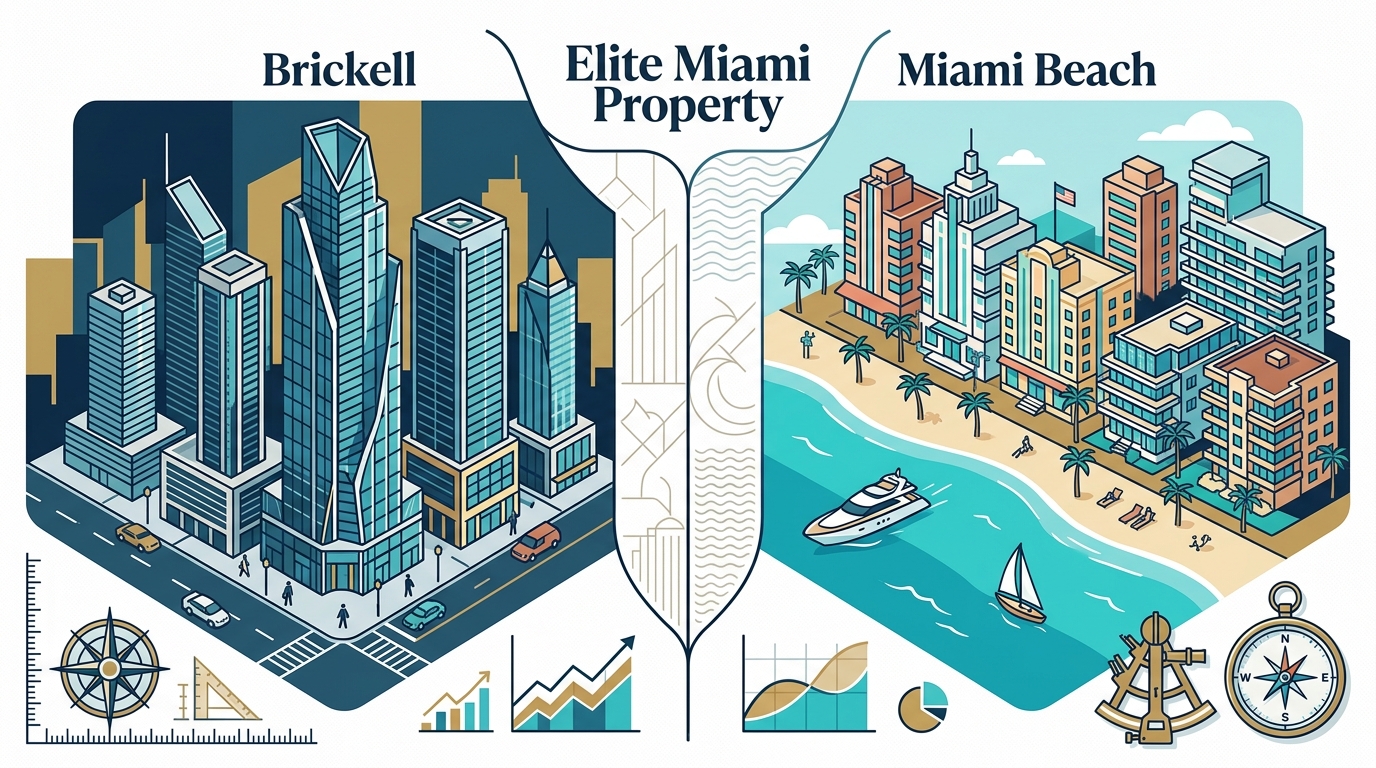
Beachfront Proximity and Privacy
The primary driver of value in Miami Beach is proximity to the water. Properties here often feature direct beach access, private balconies with ocean views, and a sense of privacy that is difficult to replicate in a high-rise urban setting. Miami Beach is defined as a coastal resort city in Miami-Dade County, Florida, known for its art deco architecture and vibrant nightlife. However, the residential side of the island offers a stark contrast to the tourist-heavy zones, with gated communities and luxury estates providing exclusivity.
Living in Miami Beach requires a different approach to daily life. While the amenities are world-class, the cost of living is significantly higher. Groceries, dining, and services often carry a premium due to the island's logistics and tourist demand. However, the trade-off is a lifestyle centered around outdoor activities, water sports, and a connection to nature that is absent in the concrete jungle of Brickell.
Architectural Diversity
Unlike Brickell's uniform modernity, Miami Beach boasts a wide array of architectural styles. From the historic Art Deco buildings in South Beach to the Mediterranean Revival estates in Coral Gables (which borders Miami Beach), the aesthetic variety is immense. This diversity appeals to buyers who value character and history in their homes. New developments in the area often blend modern luxury with nods to the past, creating unique hybrid structures.
Price Dynamics and Entry Points
When comparing Brickell and Miami Beach, price is the most immediate differentiator. Both markets are premium, but the entry points and price per square foot vary significantly based on specific location and property type.
| Feature | Brickell | Miami Beach |
|---|---|---|
| Median Condo Price | Lower to Mid-range | Mid to High-range |
| Price per Sq Ft | Competitive | Premium |
| HOA Fees | High (Amenities) | Variable (Location Dependent) |
| Best For | Urban Professionals | Luxury Lifestyle Seekers |
| Market Liquidity | High | Moderate to High |
In Brickell, buyers can often find more affordable entry points for luxury living. A two-bedroom condo in Brickell may cost significantly less than a comparable unit in Miami Beach, especially if the Miami Beach property is oceanfront. However, Brickell's HOA fees are notoriously high due to the extensive amenities and building maintenance costs. These fees can range from $1,000 to $2,000 or more per month for luxury units.
Miami Beach prices are driven by scarcity and view. Oceanfront properties command a massive premium, often doubling the price of inland units in the same building. The market here is less sensitive to interest rate fluctuations because the buyer pool is often cash-rich or international. This makes Miami Beach a more stable market during economic downturns, but with a higher initial capital requirement.
Lifestyle and Amenities Comparison
The lifestyle difference between these two neighborhoods is profound. Brickell offers a fast-paced, urban experience. Residents enjoy easy access to world-class dining, nightlife, and cultural institutions. The area is home to numerous restaurants, bars, and fitness studios, all within walking distance. This convenience is ideal for those who work long hours and want to minimize commute time.
Miami Beach, on the other hand, offers a slower, more leisurely pace. The focus is on outdoor living, from morning jogs on the beach to evening dinners with ocean views. The social scene is more varied, ranging from high-energy clubs to quiet beach bars. For families, Miami Beach offers more green spaces and parks, although school options may vary in quality compared to other parts of Miami-Dade County.
Transportation and Connectivity
Brickell is superior in terms of public transportation. The Metromover and Metrorail provide easy access to the rest of Miami, making it a hub for commuters. Miami Beach relies more heavily on cars, although bus services are improving. Traffic congestion can be a significant issue in Miami Beach, especially during peak tourist seasons and events. This makes Brickell a more practical choice for those who do not wish to drive daily.
Investment ROI and Rental Yields
For investors, both markets offer strong potential, but the strategies differ. Brickell is ideal for short-term rental investors due to its high demand from business travelers and tourists. The area's proximity to conventions and corporate offices ensures a steady stream of visitors. However, competition is fierce, and property management costs are higher.
Miami Beach is better suited for long-term appreciation and luxury rentals. The scarcity of oceanfront property ensures that values tend to hold or increase over time. International buyers often purchase here as a second home or investment property, driving demand for high-end rentals. According to recent real estate reports, luxury properties in Miami Beach have shown resilience against market corrections, maintaining their value better than mid-tier properties in other areas.
Risk Factors
Both markets face risks related to climate change and insurance costs. Miami Beach is particularly vulnerable to sea-level rise and flooding. Insurance premiums have skyrocketed in recent years, impacting net returns for investors. Brickell is also at risk, but its elevation and infrastructure may offer some protection. Buyers must factor in these long-term costs when calculating ROI.
Key Takeaways
- Brickell is the financial hub of Miami, offering high-density urban living with excellent walkability and public transit access.
- Miami Beach provides a coastal luxury lifestyle with direct beach access and a resort-like atmosphere.
- Price Points in Brickell are generally lower for comparable square footage, but HOA fees are higher.
- Investment Strategy in Brickell favors short-term rentals, while Miami Beach favors long-term appreciation.
- Lifestyle in Brickell is fast-paced and professional, whereas Miami Beach is leisure-oriented and social.
- Transportation in Brickell is superior due to the Metromover and Metrorail systems.
- Risk in Miami Beach includes higher insurance costs and flood vulnerability.
Frequently Asked Questions
Which is better for first-time home buyers in Miami?
Brickell often offers more accessible entry points for first-time buyers due to a wider range of condo sizes and price points. However, Miami Beach has emerging neighborhoods like North Beach that offer more affordable options.
Are HOA fees higher in Brickell or Miami Beach?
HOA fees in Brickell are typically higher due to the extensive amenities and building maintenance required for high-rise structures. Miami Beach fees vary widely based on the property type and location.
Is Miami Beach safe for families?
Yes, many areas of Miami Beach are considered safe for families, particularly Mid-Beach and North Beach. These areas offer more parks and quieter streets compared to South Beach.
How does traffic compare between Brickell and Miami Beach?
Brickell has better public transportation options, reducing the need for driving. Miami Beach relies more on cars, and traffic can be heavy during peak hours and tourist seasons.
Which market has better rental yields?
Brickell often offers higher gross rental yields due to strong demand from business travelers. Miami Beach may offer better long-term appreciation but lower gross yields due to higher purchase prices.
What is the best time to buy in these markets?
The best time to buy is often during the winter months when inventory is higher, but prices may be more competitive. Summer can offer better deals as sellers are more motivated.
Do I need a car in Brickell?
Many residents in Brickell do not need a car due to the walkability and public transit options. However, owning a car provides flexibility for weekend trips and errands.
Start Your Miami Real Estate Journey Today
Choosing between Brickell and Miami Beach is a significant decision that impacts your lifestyle, investment portfolio, and daily routine. The experts at The Raymond International Group are here to guide you through this complex market. With over 30 years of local experience, we provide the insights you need to make an informed choice. Contact us today to schedule a consultation and explore the best opportunities in Miami's most dynamic neighborhoods.