

Miami Condo vs. Single-Family Home: Which Investment Wins in 2026?
Miami real estate remains one of the most dynamic markets in the United States, attracting global capital and domestic migrants alike. According to recent market analyses, luxury property sales in South Florida have shown remarkable resilience, with high-net-worth individuals continuing to drive demand in prime locations like Miami Beach and Brickell. Understanding the fundamental differences between condo and single-family home investments is critical for maximizing returns in this competitive landscape. This guide breaks down the financial, lifestyle, and structural factors that define each property type.
Market Overview and Trends
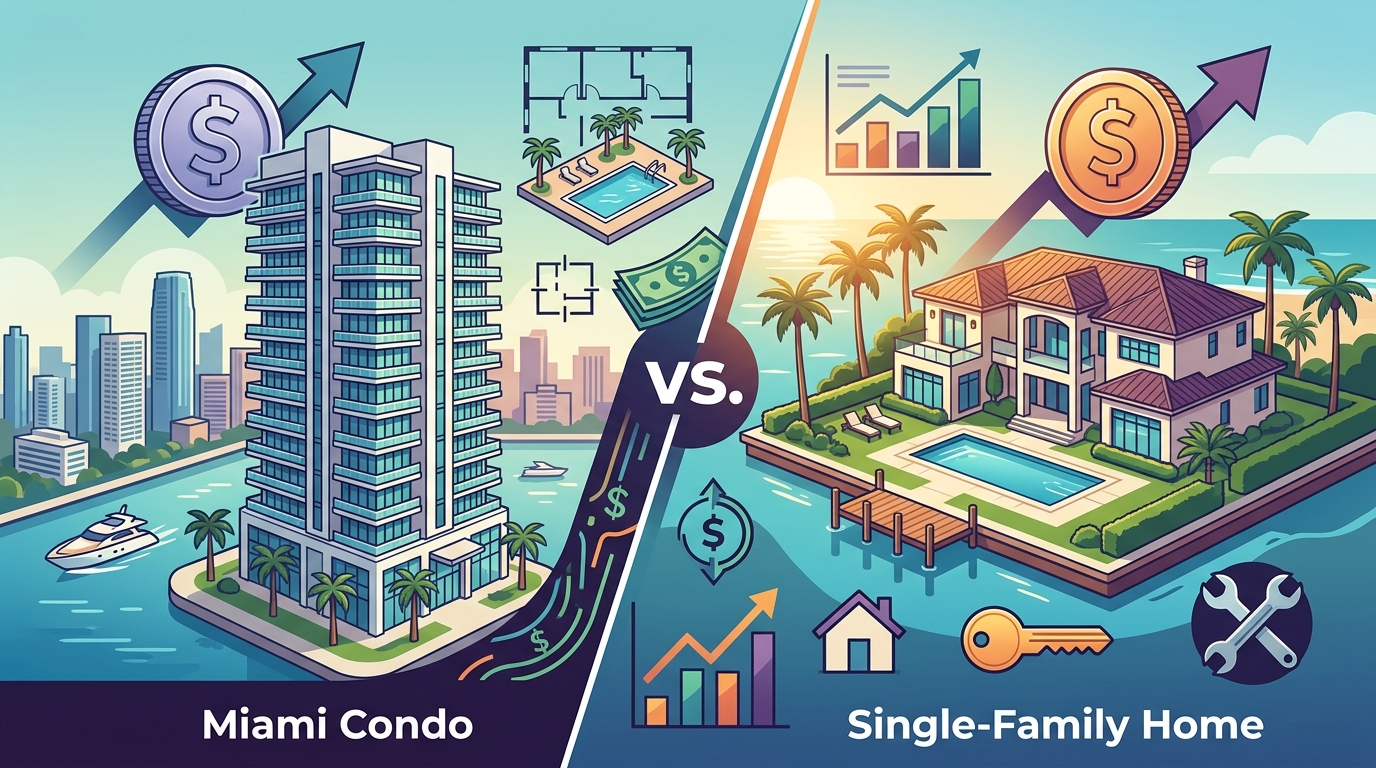
The Miami real estate ecosystem is defined by its diversity. Buyers often choose between the vertical living of high-rise condos and the horizontal sprawl of single-family estates. Each segment serves a different demographic and investment strategy. Condos dominate the urban core, offering proximity to business districts and nightlife. Single-family homes are prevalent in suburban enclaves like Coconut Grove and Key Biscayne, providing privacy and land ownership.
Recent data indicates that inventory levels fluctuate significantly between these two categories. Condo supply is often limited by new construction timelines and zoning regulations in dense areas. In contrast, single-family home inventory is constrained by land availability and historical preservation laws in certain neighborhoods. This scarcity drives competition and influences pricing strategies for both asset classes.
For investors, the choice often depends on the target tenant profile. Condos attract young professionals and seasonal renters who prioritize location over space. Single-family homes appeal to families and long-term residents seeking stability and outdoor amenities. Understanding these demographic shifts is essential for making an informed decision.
Financial Analysis and Costs
One of the most significant differentiators between these property types is the ongoing cost structure. Condo owners pay monthly homeowners association (HOA) fees, which cover building maintenance, insurance, amenities, and staff salaries. These fees can range from a few hundred to several thousand dollars per month, depending on the building's luxury level and services offered.
Single-family home owners do not pay HOA fees, but they bear the full cost of property maintenance, landscaping, and repairs. This responsibility can be substantial, especially in Miami's humid climate where air conditioning systems and roofs require regular upkeep. However, the absence of HOA fees means greater control over budgeting and potential savings over time.
Property taxes also vary based on the assessed value and local millage rates. While both property types are subject to similar tax structures, the assessed value of single-family homes often includes the land value, which can be higher in desirable neighborhoods. Condos are assessed primarily on the unit itself, which may result in lower tax bills in some cases.
Lifestyle and Maintenance
Lifestyle preferences play a crucial role in the condo versus single-family home debate. Condo living offers a resort-like experience with amenities such as pools, gyms, concierge services, and security. This model appeals to those who value convenience and social interaction. Residents can enjoy a low-maintenance lifestyle, as exterior upkeep and landscaping are handled by the building management.
Single-family homes provide privacy and autonomy. Owners have the freedom to modify their property, whether through renovations, landscaping, or adding extensions. This level of control is appealing to those who want to create a personalized living space. However, it also requires active management and time commitment for maintenance tasks.
Community dynamics differ significantly between the two. Condo communities often have strict rules and regulations governing noise, pets, and rentals. Single-family neighborhoods may have homeowners associations with covenants, but the rules are typically less restrictive than those in high-rise buildings. This flexibility allows for a more relaxed living environment.
Investment ROI and Appreciation
Return on investment (ROI) is a key consideration for any real estate purchase. Condos often offer higher rental yields due to their lower entry price and high demand from renters. They are ideal for short-term rentals or vacation homes, provided the building allows such leases. However, appreciation rates can be volatile, influenced by building reputation and HOA financial health.
Single-family homes generally appreciate at a steadier rate, driven by land scarcity and neighborhood development. Land value tends to increase over time, providing a solid foundation for long-term wealth building. These properties are also less susceptible to market fluctuations caused by building-specific issues, such as special assessments or litigation.
Historical data shows that single-family homes in established Miami neighborhoods have outperformed condos in terms of capital appreciation over the last decade. However, condos in prime locations like Miami Beach have seen significant value increases due to international demand. Investors must weigh these trends against their individual financial goals and risk tolerance.
Financing Options and Requirements
Financing a condo or single-family home involves different criteria and processes. Lenders often have stricter requirements for condo loans, including approval of the building by Fannie Mae or Freddie Mac. This ensures that the building meets certain financial and insurance standards. If a building is not approved, buyers may need to seek specialized financing or pay a larger down payment.
Single-family home loans are more straightforward, with a wider range of lender options and competitive interest rates. Down payment requirements can be lower for primary residences, making entry into the market more accessible. However, credit score and debt-to-income ratio remain critical factors for approval.
Pre-approval is essential in both cases to demonstrate financial readiness to sellers. Working with a knowledgeable mortgage partner can streamline the process and secure favorable terms. Our team at The Raymond International Group can connect you with trusted lenders who specialize in Miami real estate transactions.
Key Takeaways
- Condos offer lower maintenance responsibilities and access to luxury amenities, appealing to urban professionals.
- Single-family homes provide greater privacy, autonomy, and long-term appreciation potential due to land ownership.
- HOA fees in condos can range from hundreds to thousands of dollars monthly, impacting overall cash flow.
- Financing for condos requires building approval, while single-family homes have more flexible lending options.
- Miami's luxury market remains resilient, with high demand in both condo and single-family segments.
- Investment ROI varies by location, with condos offering higher yields and single-family homes offering steadier appreciation.
- Understanding local zoning and development trends is crucial for predicting future value growth.
Frequently Asked Questions
What is the average HOA fee for a luxury condo in Miami Beach?
HOA fees for luxury condos in Miami Beach can vary widely, typically ranging from $1,000 to $3,000 or more per month, depending on the building's amenities and services.
Are condos in Miami a good investment for rental income?
Yes, condos can be excellent for rental income, especially in high-demand areas like Brickell and Miami Beach, where short-term and long-term rental demand is strong.
How does property tax compare between condos and single-family homes?
Property taxes depend on the assessed value of the property. Single-family homes often have higher taxes due to land value, while condos may have lower taxes but higher HOA fees.
Can I rent out my condo in Miami on a short-term basis?
Short-term rental policies vary by building. Many luxury condos allow them, but some have restrictions. It is essential to review the building's bylaws before purchasing.
What is the best neighborhood for single-family homes in Miami?
Neighborhoods like Coconut Grove, Key Biscayne, and Coral Gables are highly sought after for single-family homes due to their privacy, schools, and community amenities.
Do condos appreciate in value like single-family homes?
Condos can appreciate, but the rate depends on the building's reputation, location, and market conditions. Single-family homes generally appreciate more steadily due to land value.
What is the down payment requirement for a condo in Miami?
Down payment requirements for condos can be higher than for single-family homes, often ranging from 20% to 30% for investment properties, depending on the lender and building approval.
Contact Our Experts
Navigating the Miami real estate market requires expert guidance and local insight. Whether you are considering a condo in Miami Beach or a single-family home in Coconut Grove, The Raymond International Group is here to help. Our team provides personalized service, market analysis, and negotiation expertise to ensure your success. Contact us today to schedule a consultation and explore your options.