

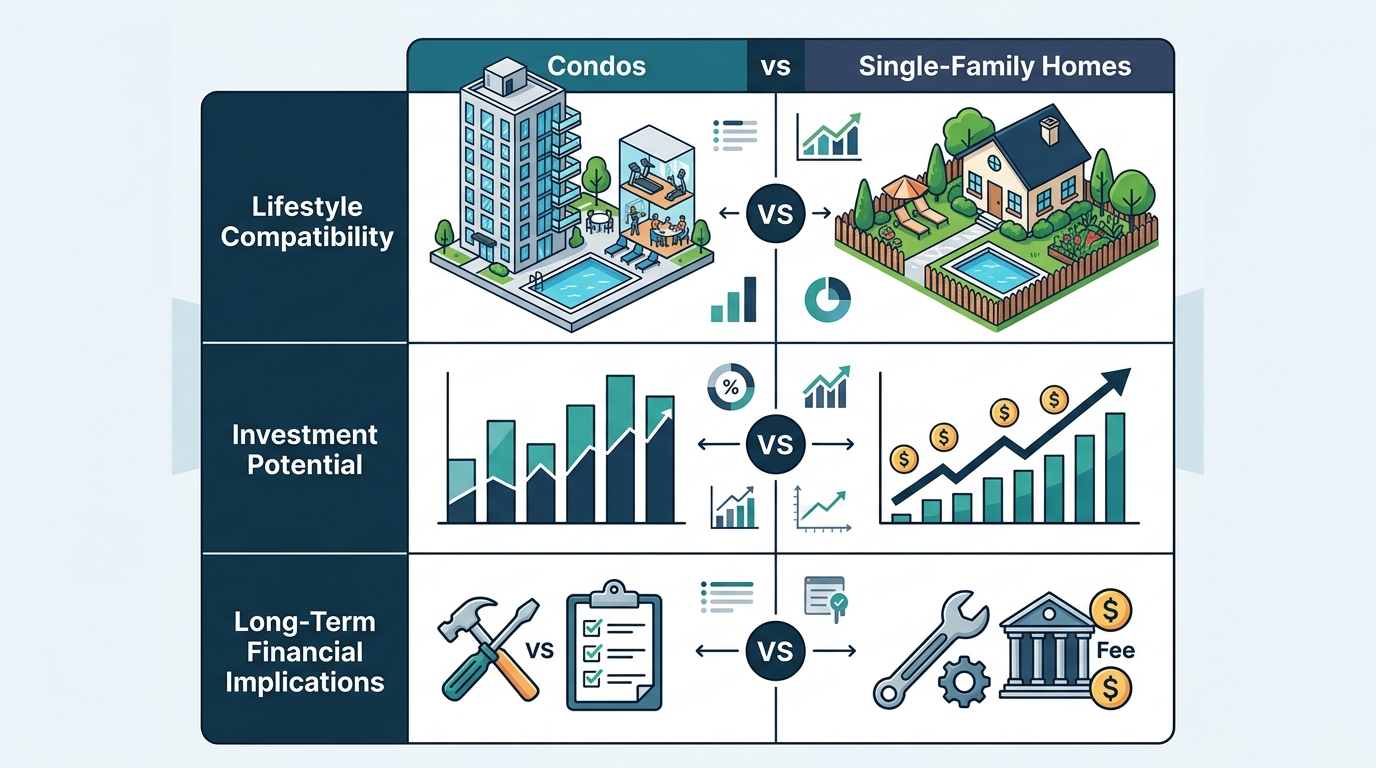
Understanding the Miami real estate market requires more than just looking at price tags. It demands a deep dive into lifestyle compatibility, investment potential, and long-term financial implications. According to recent market analyses, the median home price in Miami-Dade County has fluctuated significantly, with single-family homes often commanding a premium over condominiums in specific neighborhoods like Coconut Grove and Key Biscayne. This disparity creates a complex decision matrix for buyers who must weigh immediate affordability against long-term appreciation. The choice between a high-rise condo and a detached house is not merely aesthetic. It is a fundamental decision that dictates your daily routine, your tax liability, and your exit strategy.
Market Overview and Pricing Dynamics
The Miami real estate landscape is defined by its diversity. From the bustling high-rises of Brickell to the quiet, tree-lined streets of Coral Gables, the options are vast. However, the price per square foot often tells a different story depending on the property type. Single-family homes generally offer more land and privacy, which drives up the cost. In contrast, condominiums provide a lower entry point into the Miami market, making them attractive to first-time buyers and investors alike.
When comparing these two categories, it is essential to look at the specific neighborhoods. For instance, a condo in Miami Beach might cost significantly more than a single-family home in Hialeah, despite the latter offering more space. This geographic variance is critical for anyone looking to understand local market conditions. The supply and demand dynamics also differ. Condos often have higher turnover rates due to their popularity among investors, while single-family homes tend to stay in families longer, creating a more stable but less liquid market.
Lifestyle and Maintenance Responsibilities
Your daily life will be heavily influenced by your choice of housing. A condominium lifestyle is often described as low-maintenance. This is because the Homeowners Association (HOA) handles exterior maintenance, landscaping, and often even cable and internet services. This convenience is ideal for busy professionals or those who travel frequently. However, this comes with a loss of privacy and autonomy. You must adhere to strict rules regarding pets, renovations, and even the color of your curtains in some buildings.
On the other hand, owning a single-family home means you are the sole decision-maker. You can paint your walls, renovate your kitchen, or build a pool without seeking committee approval. This freedom is invaluable to many buyers. However, it also means you are responsible for every repair. A leaking roof or a broken HVAC system is entirely your financial burden. For those who enjoy hands-on management, this is a feature, not a bug. For others, it is a source of significant stress. Understanding your personal tolerance for maintenance is a crucial step in the home-buying process. Many clients find that reading our blog helps clarify these lifestyle differences before they start touring properties.
Financial Implications and HOA Fees
The financial structure of condos versus single-family homes is one of the most significant differentiators. Condominiums require monthly HOA fees. These fees can range from a few hundred dollars to several thousand, depending on the amenities offered. In luxury buildings with pools, gyms, concierge services, and security, these fees are substantial. It is vital to review the HOA financials carefully. A well-managed reserve fund indicates a healthy building, while a underfunded reserve can lead to special assessments, which are sudden, large charges to owners for major repairs.
Single-family homes do not have HOA fees, but they do have property taxes and insurance costs that can be higher due to the land value and the structure's exposure to weather risks. In Florida, homeowners insurance has risen sharply in recent years. This increase affects both property types but can be particularly steep for coastal single-family homes due to flood insurance requirements. When calculating your budget, you must look beyond the mortgage payment. You need to account for the total cost of ownership. A detailed financial analysis can help you project these costs over a five to ten-year period.
Investment Potential and Appreciation
For investors, the question is always about return on investment. Historically, single-family homes have shown stronger appreciation rates in Miami compared to condos. This is largely due to the scarcity of land. As Miami continues to grow, the value of the land itself increases. Condos, while they do appreciate, often do so at a slower pace because the building structure depreciates over time. However, condos offer a different type of return: rental income. The short-term rental market in Miami is robust, particularly in areas like South Beach and Brickell. Condos are often easier to rent out on a short-term basis due to building amenities and location.
It is important to note that not all buildings allow short-term rentals. Many have strict restrictions to preserve the residential nature of the community. If you are buying a condo with the intent to rent it out, you must verify these rules before making an offer. Single-family homes also face zoning restrictions in some neighborhoods. Understanding these regulatory environments is key to maximizing your investment. We provide comprehensive market reports that break down these trends by neighborhood.
Financing Options and Accessibility
Financing a condo can be more complex than financing a single-family home. Banks require the condominium project itself to be approved by agencies like Fannie Mae or Freddie Mac. If a building is not on the approved list, you may need to use a portfolio loan or pay more in cash. This can limit your buyer pool and potentially affect the resale value of the unit. Single-family homes are generally easier to finance because the collateral is straightforward. The land and the structure are tangible assets that banks are comfortable with.
Additionally, down payment requirements can vary. Some condo loans require higher down payments, especially if the building has a high percentage of commercial space or if it is considered a high-risk property. It is crucial to get pre-approved early in the process. Our partners at Elite Miami Property Finance can help you navigate these complexities and find the best rates for your specific situation. Being pre-approved gives you a competitive edge in a market where sellers often prefer buyers with solid financing.
Key Takeaways
- Cost of Entry: Condos typically offer a lower entry price, making them accessible to a wider range of buyers in Miami.
- Maintenance: Single-family homes require full owner responsibility for repairs, while condos offer a low-maintenance lifestyle via HOA.
- HOA Fees: Condo owners must budget for monthly HOA fees, which can be substantial in luxury buildings with extensive amenities.
- Appreciation: Single-family homes generally appreciate faster due to land scarcity, while condos may offer better rental income potential.
- Financing: Condo loans require building approval, which can be a hurdle for buyers in older or less stable buildings.
- Lifestyle: Condos offer community and security, while single-family homes provide privacy and autonomy.
- Insurance: Both property types face rising insurance costs in Florida, but coastal single-family homes may face higher flood insurance premiums.
Frequently Asked Questions
Which is better for investment in Miami?
Single-family homes generally offer better long-term appreciation due to land value. However, condos can provide higher cash flow through short-term rentals if the building allows it.
Are HOA fees tax-deductible?
Generally, HOA fees are not tax-deductible for primary residences. However, if the condo is a rental property, a portion of the fees may be deductible as a business expense.
Can I rent out my condo short-term?
This depends entirely on the building's rules. Many luxury buildings in Miami Beach and Brickell prohibit short-term rentals to maintain a residential atmosphere.
How do I check if a condo building is approved for financing?
You can check the Fannie Mae Condominium Approval List online. Our team can also perform this due diligence for you during the contract period.
What is the average HOA fee in Miami?
HOA fees vary widely. In older buildings, they might be $300 to $500 per month. In luxury high-rises with concierge and valet services, they can exceed $1,000 to $2,000 per month.
Is Miami real estate a good buy right now?
Miami remains a strong market for both buyers and sellers. While prices are high, the demand for quality housing continues to drive growth. Timing the market is difficult, so focusing on long-term value is advisable.
Do I need a real estate agent for a condo purchase?
Yes, especially in Miami. The condo market has unique complexities regarding building financials, HOA rules, and financing approvals that require expert navigation.
Contact Us for Expert Guidance
Navigating the choice between a condo and a single-family home in Miami is a significant decision. It requires a nuanced understanding of the local market, financial implications, and lifestyle preferences. The Raymond International Group has over 30 years of experience helping clients make these exact decisions. We provide personalized guidance tailored to your unique needs and goals.
Whether you are looking for a waterfront condo in Miami Beach or a spacious single-family home in Key Biscayne, we are here to help. Contact us today to schedule a consultation. Let us help you find the perfect home in the Magic City. Visit our contact page to get started.